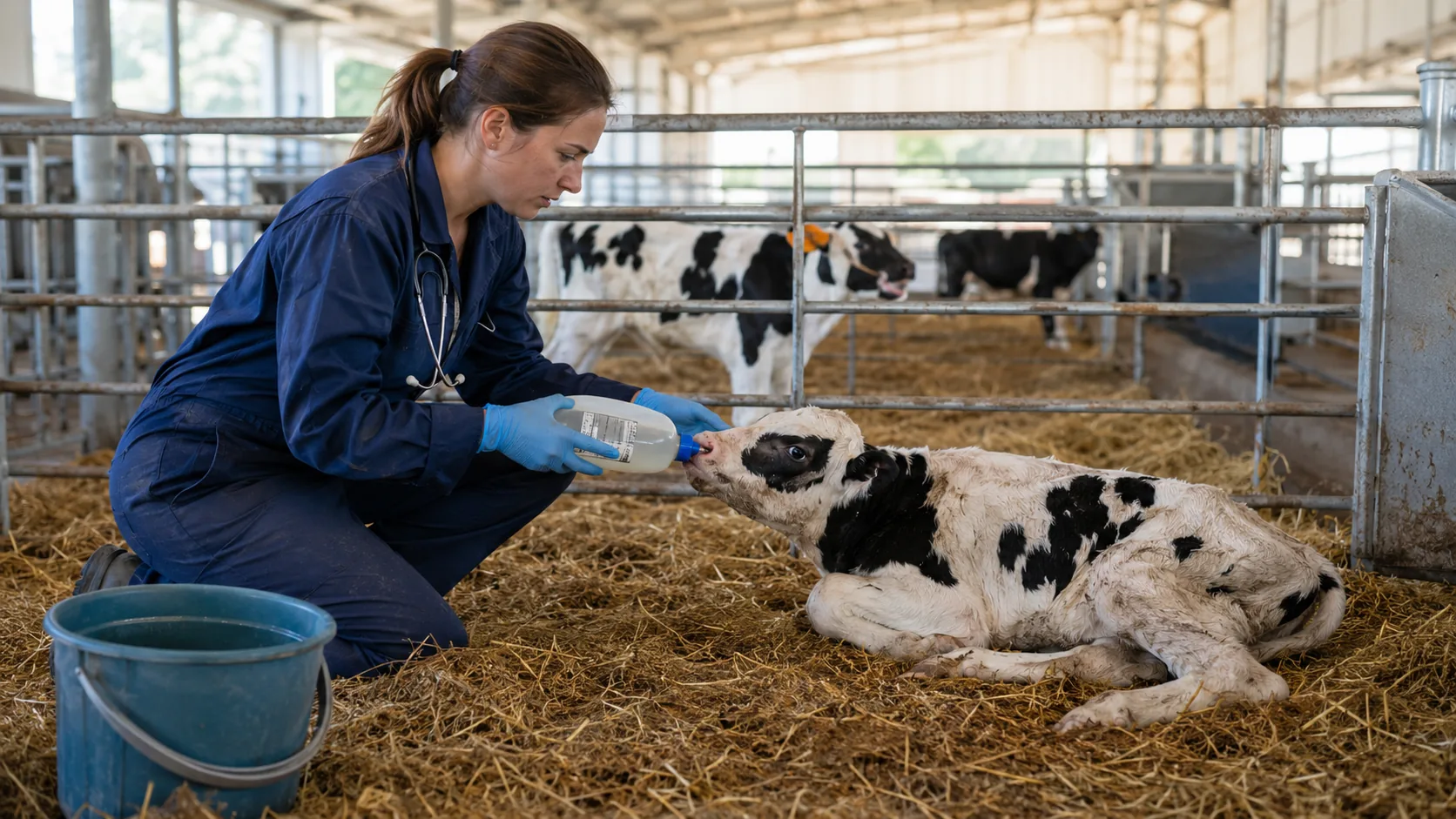
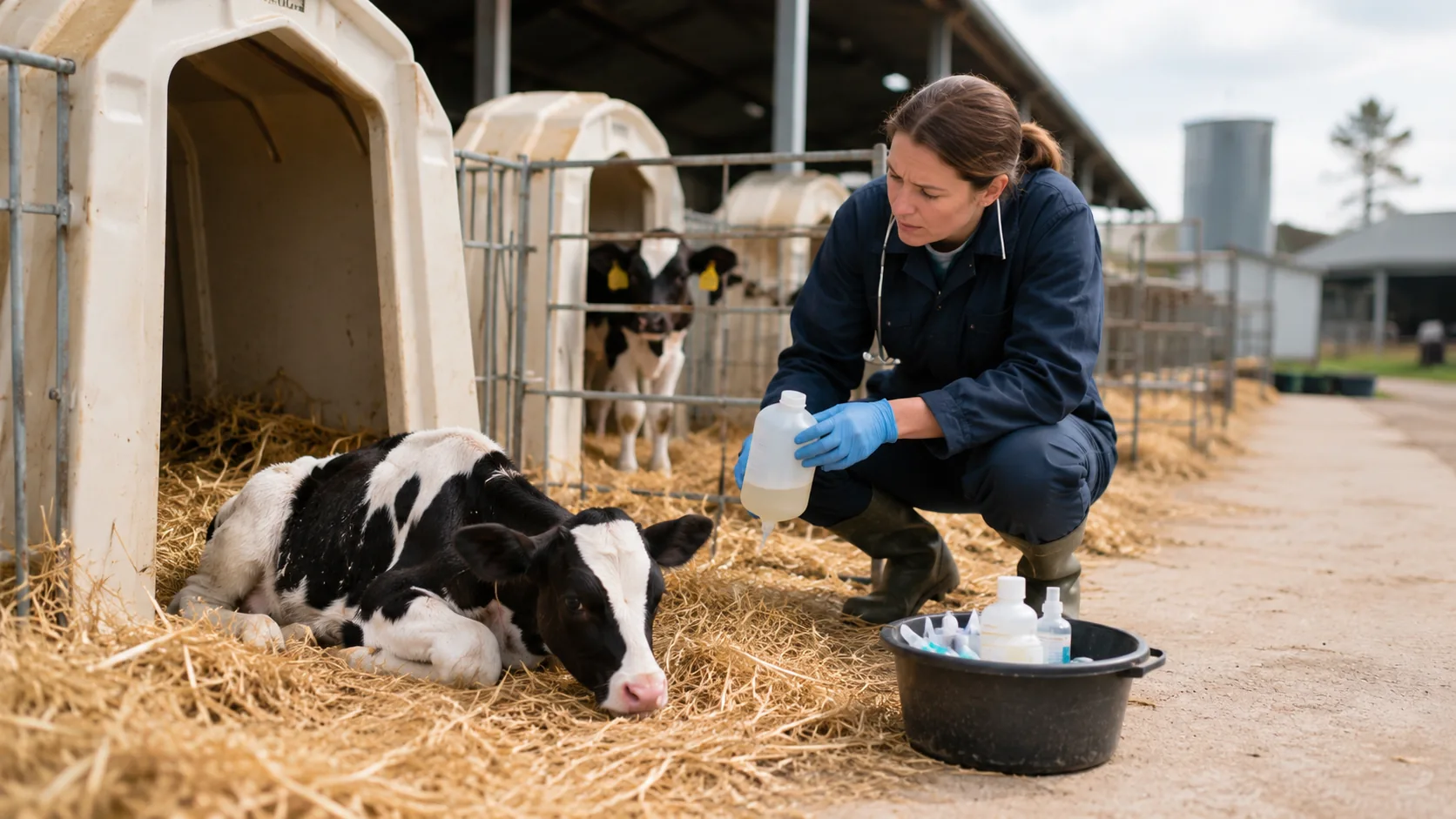
When talking about mineral disorders after calving, most attention focuses on calcium and hypocalcemia. Meanwhile, growing research shows that phosphorus deficiency can be an equally important problem, which often remains unrecognized or is mistaken for other metabolic disorders.
Phosphorus plays a key role in energy metabolism, muscle function, and proper nervous system activity. Its deficiency can significantly affect the health and performance of cows in the first weeks of lactation.
Why is phosphorus so important?
About 80% of the phosphorus in the body is found in the bones, but its importance extends far beyond skeletal structure.
Phosphorus is involved in:
- energy production (ATP),
- muscle function,
- carbohydrate and fat metabolism,
- nervous system function,
- milk synthesis.
During the perinatal period, the demand for this element increases rapidly, while the body must simultaneously supply significant amounts of minerals to the milk being produced.
Phosphorus deficiency and postpartum recumbency
One of the most interesting and, at the same time, most frequently overlooked issues is the relationship between phosphorus deficiency and postpartum recumbency.
Studies show that phosphorus deficiency is very common in cows suffering from postpartum recumbency. Depending on the population and reference values used, even 40–60% of cows with postpartum recumbency simultaneously show hypophosphatemia.
This means that not every case of recumbency is solely a consequence of calcium deficiency.
In field practice, there is a growing emphasis on the need to assess both calcium and phosphorus status.
When is phosphorus level lowest?
The greatest drop in phosphorus concentration is usually observed:
📉 within the first 24–72 hours after calving
It is precisely during this time that the body experiences the greatest metabolic changes associated with the onset of lactation.
Colostrum and milk production causes a sudden increase in mineral requirements, and compensatory mechanisms are not always able to meet this demand quickly enough.
That is why the first days after calving are the period of the greatest risk of hypophosphatemia.
How to recognize phosphorus deficiency?
Symptoms can be nonspecific and often resemble other metabolic disorders.
The most commonly observed signs include:
- weakness,
- reduced feed intake,
- reluctance to move,
- decreased activity,
- reduced milk production,
- recumbency.
It is precisely this similarity to the symptoms of hypocalcemia that causes phosphorus deficiency to often be underestimated.
What is the cost of phosphorus deficiency?
The greatest economic losses do not result from the deficiency itself, but from its consequences.
Hipofosfatemia może prowadzić do:
💰 wydłużonego okresu rekonwalescencji po porodzie
💰 niższego pobrania paszy
💰 spadku produkcji mleka
💰 zwiększonego ryzyka wtórnych chorób metabolicznych
💰 pogorszenia płodności
💰 dodatkowych kosztów leczenia
W przypadku stad wysokowydajnych nawet niewielkie obniżenie pobrania paszy w pierwszych dniach laktacji może skutkować znacznymi stratami produkcyjnymi w całej laktacji.
Dlaczego warto działać szybko?
Pierwsze dni po wycieleniu decydują o przebiegu całej laktacji.
Skuteczne wsparcie gospodarki mineralnej pozwala:
✔ wspierać metabolizm energetyczny
✔ poprawiać funkcjonowanie mięśni
✔ ograniczać ryzyko zalegania
✔ wspierać szybszy powrót do wysokiej wydajności
AnimaBol P – wsparcie gospodarki fosforowo-wapniowej
AnimaBol P został opracowany specjalnie dla krów mlecznych w okresie przejściowym i po wycieleniu.
Produkt dostarcza fosfor z czterech źródeł oraz wapń z dwóch wysoko biodostępnych źródeł, wspierając szybkie uzupełnienie kluczowych składników mineralnych. Dodatkowo zawarte witaminy A, D₃, E, K₃ oraz β-karoten wspierają odporność i procesy regeneracyjne organizmu.
Summary
Niedobór fosforu jest znacznie częstszy, niż mogłoby się wydawać. Szczególnie w pierwszych dniach po wycieleniu może wpływać na metabolizm, funkcje mięśniowe, pobranie paszy oraz wydajność mleczną.
Dlatego nowoczesne podejście do zdrowia krów świeżo wycielonych powinno uwzględniać nie tylko wapń, ale również odpowiednie wsparcie gospodarki fosforowej.