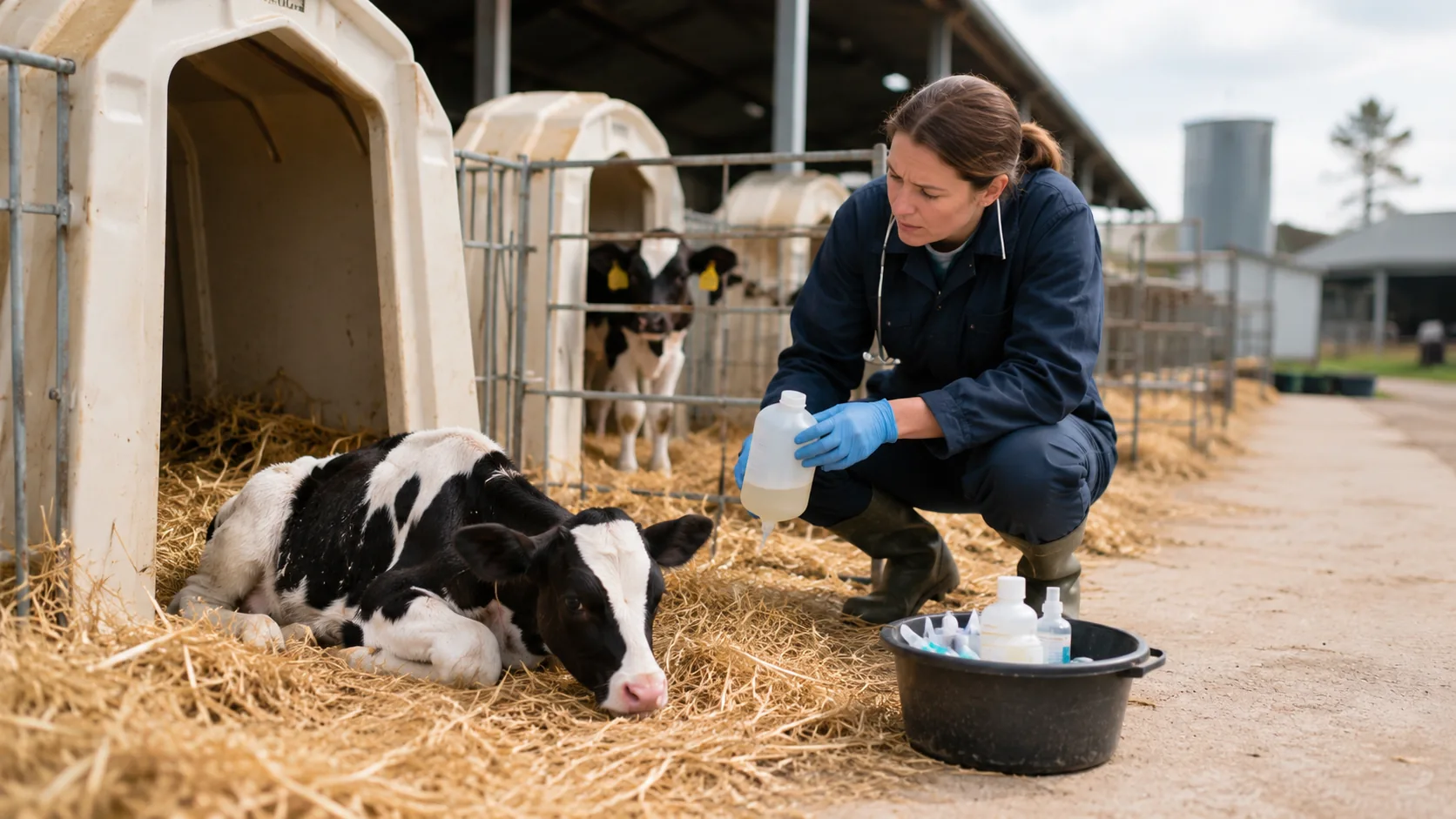
In Veterinary Practice, Diarrhea Itself Is Not the Leading Cause of Calf Mortality. The greatest threat is dehydration and the metabolic disturbances that accompany it.
Most fatal cases associated with calf diarrhea result from the loss of fluids and electrolytes, together with the progressive development of metabolic acidosis. Therefore, effective therapy should focus primarily on the rapid restoration of fluid and electrolyte balance.
How Often Do Calves with Diarrhea Become Dehydrated?
Clinically significant dehydration develops in the vast majority of calves suffering from diarrhea.
Depending on the duration of the disease and the severity of clinical signs, 70–90% of diarrheic calves develop dehydration severe enough to require therapeutic intervention.
The younger the calf, the more rapidly dehydration develops. During the first weeks of life, calves have limited water and energy reserves, meaning that even seemingly mild diarrhea can lead to severe physiological disturbances within just a few hours.
Assessing the Degree of Dehydration
Veterinarians typically assess dehydration based on:
- Skin tenting (skin elasticity)
- Eyeball position (degree of enophthalmos)
- Level of depression
- Suckle reflex
- Extremity temperature
As a general guideline:
5–6% Dehydration
- Initial clinical signs
- Slight sunken eyes
- Mild weakness
8–10% Dehydration
- Clearly sunken eyes
- Reduced skin elasticity
- Depression
- Reduced milk intake
More Than 12% Dehydration
- Recumbency
- Absent suckle reflex
- Severe metabolic acidosis
- Life-threatening condition
The Relationship Between Dehydration and Mortality
The degree of dehydration is one of the most important prognostic indicators in calves with diarrhea.
As dehydration worsens, the risk of:
- Circulatory failure
- Electrolyte imbalances
- Severe metabolic acidosis
- Death
Studies consistently show that calves dying from diarrhea typically present with advanced dehydration and severe acid-base disturbances.
For this reason, the speed of intervention is often more critical than the specific cause of the diarrhea itself.
What Happens When Rehydration Is Inadequate?
Even if a calf survives the acute phase of diarrhea, insufficient rehydration can have long-term consequences.
The most commonly observed signs include:
📉 Reduced average daily weight gain
📉 Impaired gastrointestinal development
📉 Reduced feed intake during recovery
📉 Prolonged convalescence
📉 Increased susceptibility to subsequent disease
In practice, this translates into higher rearing costs and poorer production performance later in life.
Why Are Electrolytes Alone Not Enough?
Successful management of diarrheic calves requires more than simply replacing lost water.
Effective support should also provide:
✔ Sodium
✔ Potassium
✔ Buffering agents
✔ Readily available energy
✔ Nutrients that support recovery and metabolic function
For this reason, modern electrolyte formulations combine electrolytes with energy sources and ingredients that help restore metabolic balance.
Hydration Support from VetAnima
AnimaLite
An electrolyte preparation designed to support hydration in calves during diarrhea and other conditions associated with fluid loss.
AnimaLite Liquid
A liquid electrolyte formulation that enables rapid preparation of a rehydration solution and convenient administration in both emergency treatment and preventive hydration programs.
Summary
Dehydration is the most serious consequence of calf diarrhea and is often the determining factor for prognosis and survival.
Early assessment of dehydration status, followed by prompt and appropriate rehydration therapy, can significantly reduce mortality, accelerate recovery, and minimize long-term production losses.